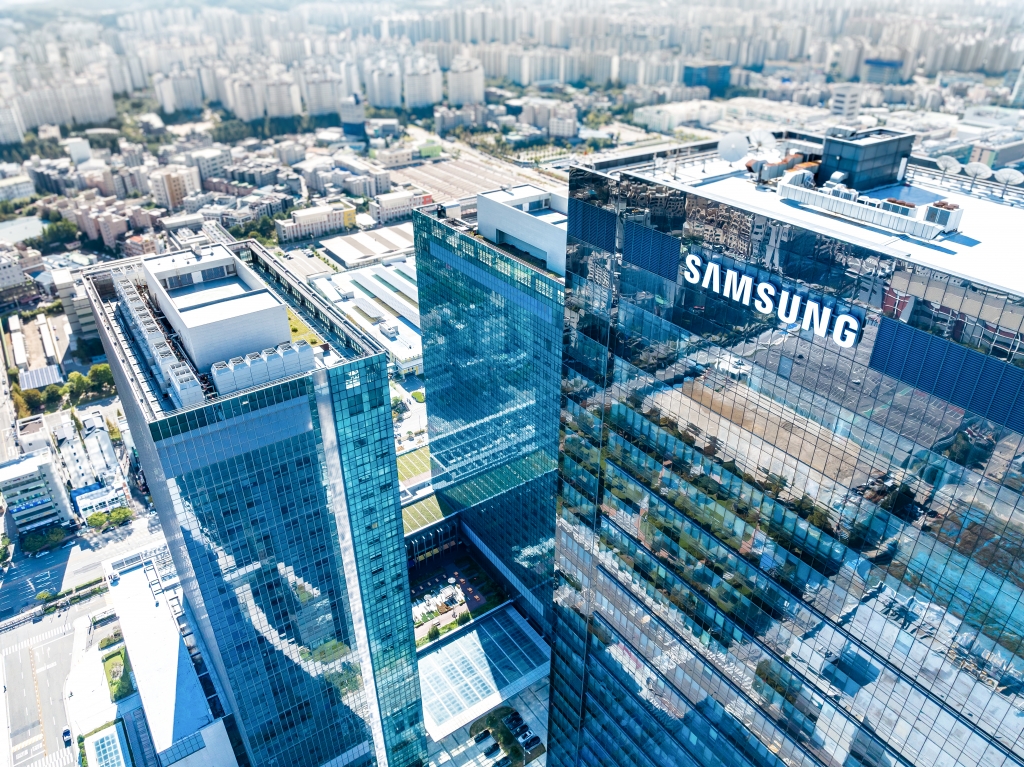
Labor and management of Samsung Electronics reached a tentative agreement on incentives at the last minute on May 20, averting a strike one and half hours before the deadline.
The tentative deal will be ratified if more than half of eligible union members participate in the vote, with a majority of those voting to approve the deal.
Union members will cast their votes until May 27 to decide whether they approve it or not.
Labor and management signed a tentative agreement on wage at the Gyeonggi Labor and Employment Office of the Ministry of Employment and Labor (MOEL) in Suwon, Gyeonggi-do, on May 20.
According to the agreement, as for the overall performance incentive (OPI), a key point of contention, both sides agreed to retain the conventional payout method, including a cap.
In return, special performance incentives will be paid out over 10 years without a cap on the condition that the semiconductor business post more than 200 trillion won in operating profit for three years from this year and 100 trillion won during the period between 2029 and 2035.
Special performance incentives will be paid out in stock, not in cash with disposal conditions attached. Management and labor agreed on 10.5 percent of the performance of their approved businesses.
If the proposal fails to secure majority support, labor and management will have to return to the negotiating table.
At stake is disagreement among members of the tech giant's different business divisions, with those in the Device Experience Division, which covers mobile and TV businesses, expressing frustration over lower bonus payouts compared with the Device Solutions Division, which oversees semiconductors.
Labor and management had been deadlocked since late last year over performance-based bonuses tied to earnings from the tech giant's artificial intelligence-related semiconductor business amid the ongoing global memory chip boom.
Of the total bonus pool, 40 percent will be allocated to the division as a whole, while 60 percent will be distributed to individual business units.
A decision on how to divide the pool among loss-making divisions — one of the most contentious issues during negotiations — was postponed for one year.
Based on forecasts that Samsung's operating profit could reach 300 trillion won this year, the agreement could translate into bonus payouts of up to 600 million won for each of the 28,000 employees in the company's profitable chip division.
Samsung Electronics Announces First Quarter 2026 Results
Samsung Electronics on April 30 reported financial results for the first quarter ended March 31, 2026.
The company posted 133.9 trillion won in consolidated revenue, an all-time quarterly high, representing a quarter-on-quarter (QoQ) increase of 43 percent. Operating profit was also an all-time high, increasing to 57.2 trillion won.
The Device Solutions (DS) Division posted a QoQ sales increase of 86 percent, with the Memory Business setting an all-time high for quarterly revenue and operating profit as a result of technological leadership in the memory market, as well as higher average selling price (ASP).
The Device eXperience (DX) Division posted a QoQ sales increase of 19 percent, supported by the launch of new flagship smartphones.
Despite higher cost pressures, the Division expanded the sales of high-value-added products across businesses to preserve profitability.
The DS Division posted 81.7 trillion won in consolidated revenue and 53.7 trillion won in operating profit for the first quarter.
The Memory Business surpassed its quarterly sales record by addressing high-value-added AI demand despite limited supply availability, with industry-wide memory price increases also a contributing factor.
Additionally, the Business led the memory market by utilizing its differentiated technology leadership.
This included initiating the industry’s first mass product sales of HBM4 and SOCAMM2 for NVIDIA’s Vera Rubin platform, as well as the timely development of PCIe Gen6 SSDs.
In Q2 2026, the Memory Business anticipates demand to remain strong amid AI infrastructure expansion and is scheduled to deliver its first HBM4E samples to solidify technical leadership.
The Business also aims to proactively capitalize on early demand for new GPUs and CPUs to be launched in the second half of 2026 and plans to continue its AI product-centric sales strategy for both DRAM and NAND.